Add the drained chickpeas, tahini, lemon juice, minced garlic, cumin, and smoked paprika to your food processor. Pulse first—I learned this the hard way when I hit blend full-speed and ended up with chickpea dust instead of texture. You want the mixture to move around the bowl, not stick to the sides in a panicked clump.
Stream the 2 tablespoons of olive oil through the feed tube while the processor runs at medium speed. This is where the magic happens: the oil emulsifies into the mixture, creating that cloud-like consistency that makes people close their eyes while eating. Don't pour it all in at once because you'll break the texture and end up with grainy instead of smooth.
Taste, then season with salt to your preference. I usually add about 1/2 teaspoon, but everyone's salt tolerance is different—taste before you commit. The lemon juice will have already begun the preservation process, so this homemade hummus sharing platter stays fresh longer than you'd expect in a refrigerator.
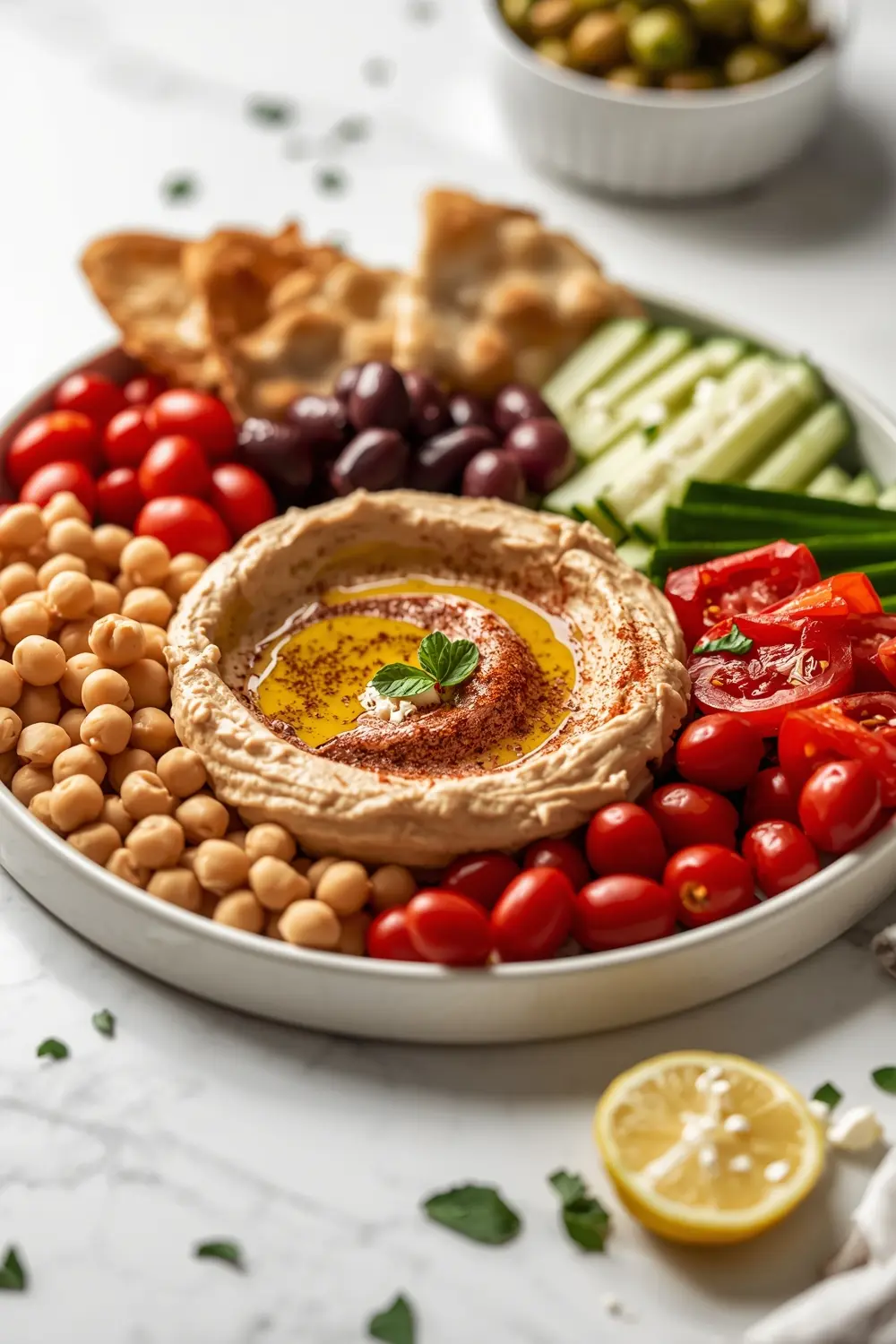
Transfer the hummus to a shallow serving bowl or platter, then use the back of a spoon to create a small well in the center. This well isn't decorative—it's functional space for drizzling extra olive oil and creating a visual anchor that says "start here." I've watched Sandra arrange the vegetables around this well three times now, and each time she says it looks more intentional than it actually was.
Arrange the pita wedges around the platter's outer edge, then build your rings inward: cherry tomatoes and cucumber sticks first, then the roasted red peppers and olives, and finally the feta scatter across the top. This isn't random—the colors move from light to dark, which keeps the eye moving around the platter instead of getting stuck in one spot.
Drizzle the top of your hummus well with additional olive oil, then sprinkle a pinch of smoked paprika across the surface. This isn't just garnish; it's an invitation. The paprika color says "this is intentional" and "this is worth trying" before anyone takes a bite.