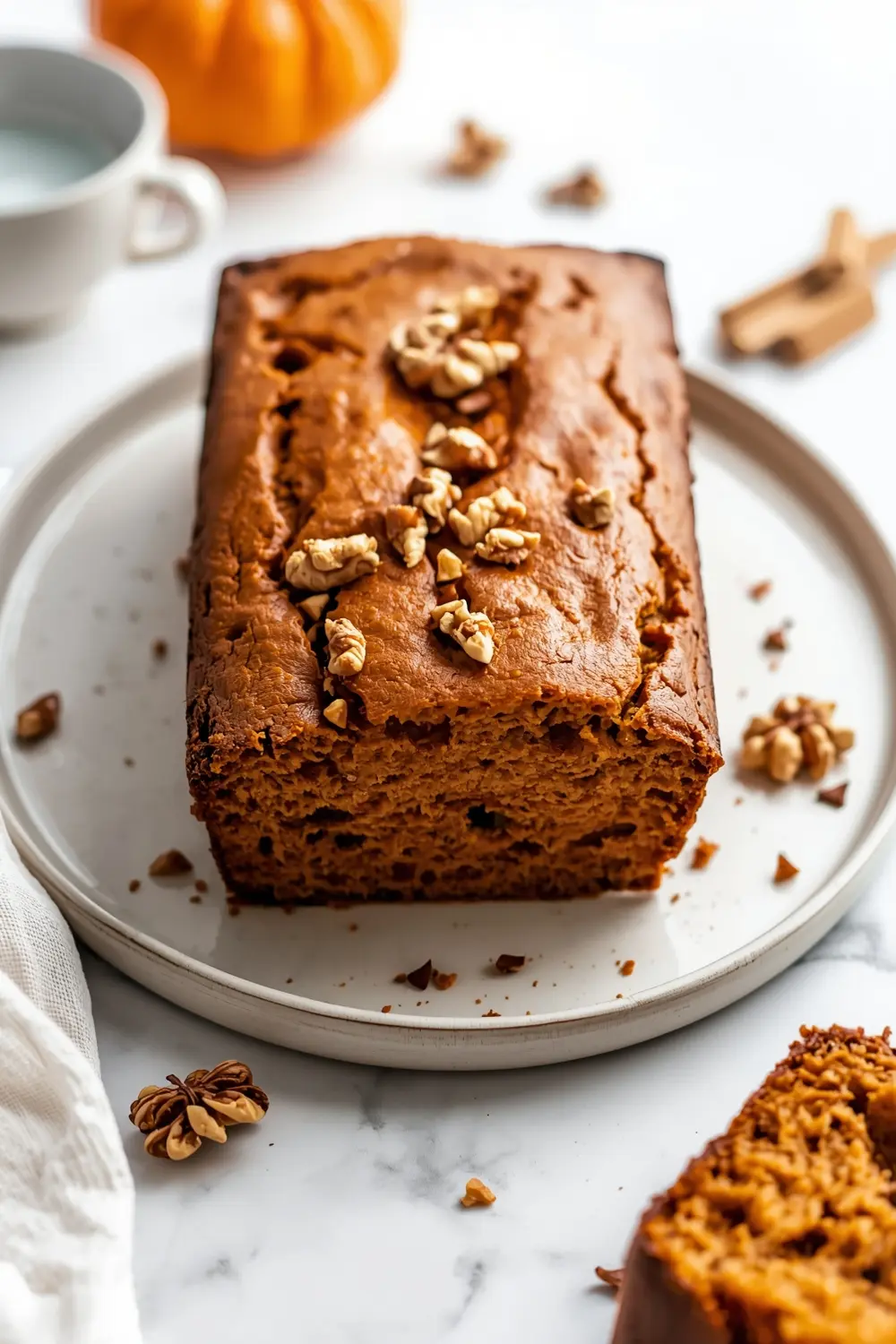
Preheat your oven to 350°F and grease two standard loaf pans with oil or butter—this recipe yields two loaves, which is intentional because one disappears immediately. I learned the hard way that single-loaf versions leave you short when the crowd actually shows up.
Whisk together 2 cups flour, 1 tsp baking powder, 1 tsp baking soda, 1/2 tsp salt, 2 tsp cinnamon, 1/2 tsp nutmeg, and 1/4 tsp cloves in a large bowl. Separating your dry ingredients first prevents pockets of baking soda from creating bitter surprises in random bites—this matters because underblended leavening ruins the whole batch.
In a separate bowl, whisk together 1 cup granulated sugar, 1/2 cup brown sugar, and 1/2 cup vegetable oil until the mixture looks sandy and broken, about 2 minutes. The brown sugar should partially dissolve into the oil because that's where the moisture magic starts working.
Add 2 large eggs one at a time, whisking fully after each addition. Then pour in 1 cup pumpkin puree and 1/2 cup milk, whisking until smooth—the batter should look slightly thick but completely combined. This is where I always hold my breath because overwhisking develops gluten, which makes pumpkin bread crowd fall sharing dense instead of tender.
Pour the wet mixture into the dry ingredients and fold together with a spatula using 15-20 strokes, stopping while you still see flour streaks. Overmixing creates tunnels; undermixing leaves pockets of flour—aim for the awkward middle. This matters more than any other step in the entire recipe.
Fold in 1/2 cup chopped walnuts gently, then divide the batter evenly between your two prepared loaf pans. Fill each pan about two-thirds full because the bread rises more than you expect.
Bake at 350°F for 48-52 minutes—the loaves are done when a toothpick inserted in the center comes out with just a few moist crumbs clinging to it, not batter. Every oven runs hot or cool; mine runs 8 minutes fast, so I check at 45 minutes and trust my instincts over the clock.
Cool in pans for 15 minutes, then turn out onto a wire rack to cool completely before slicing. This resting period prevents the bread from crumbling apart—skip it and you'll end up with chunks instead of neat slices.