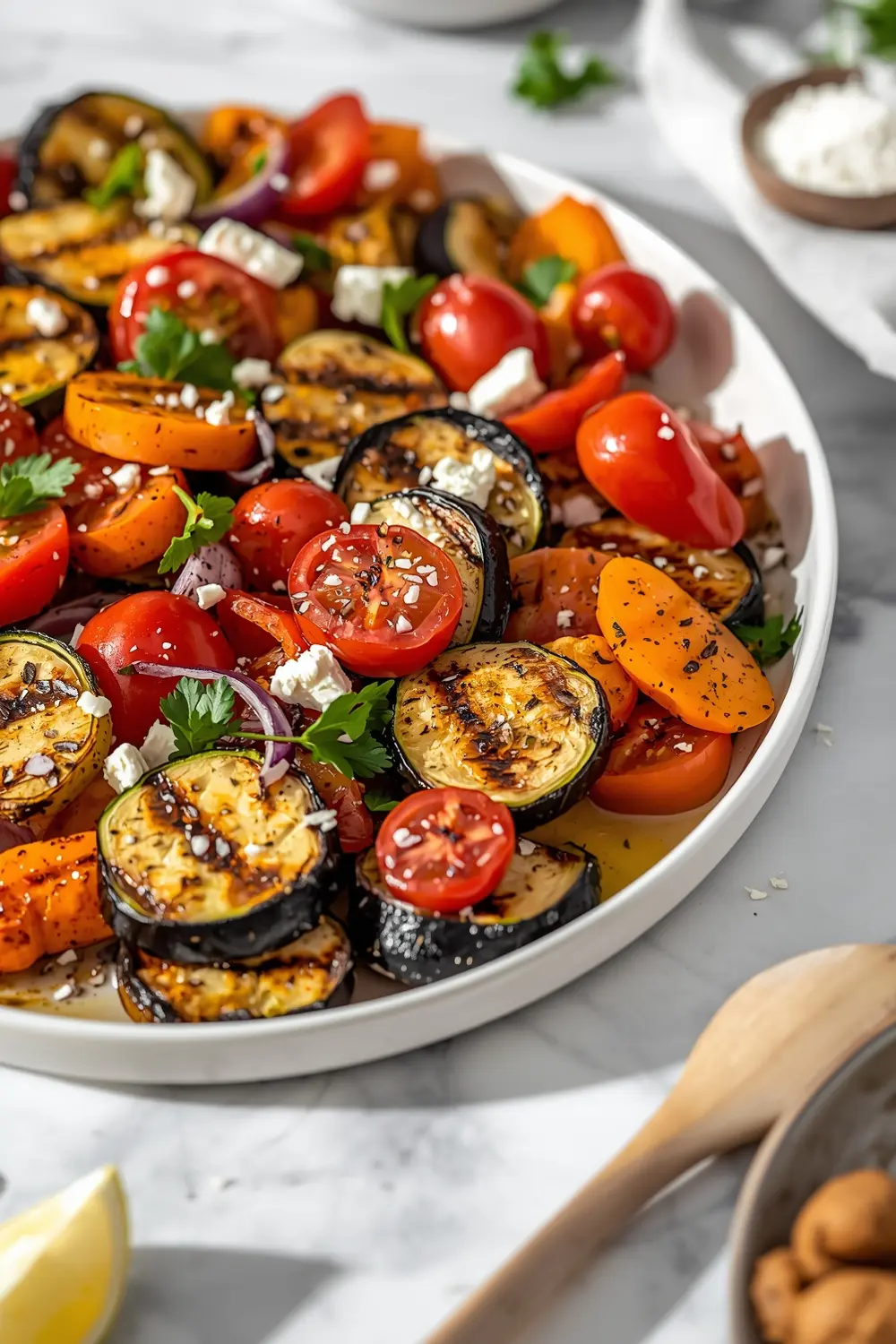
Pat all vegetables completely dry with paper towels—this matters because moisture prevents charring. I confess I once skipped this step and ended up steaming vegetables instead of grilling them, which is why I never rush it now.
Toss all vegetables except halloumi and cherry tomatoes with olive oil, smoked paprika, oregano, salt, and black pepper in a large bowl. Work the seasoning in with your hands so every piece gets coated evenly. This method distributes spices far better than sprinkling them on the grill.
Preheat grill to medium-high heat and clean grates thoroughly with a grill brush. I brush grates right before cooking vegetables because a clean surface creates better char marks and prevents sticking—that's the key difference between grilled and steamed veggies.
Grill the larger vegetables first—zucchini, peppers, eggplant, and carrots—in batches so you don't overcrowd the grill. Place them perpendicular to grates and let them sit 3-4 minutes without moving before flipping. Why? That stillness is what creates char. Most home cooks flip too early and never get that golden crust.
After the first flip, grill another 3-4 minutes until dark char marks appear. The vegetables should have some give when you press them with a fork, but still hold their shape. Transfer finished vegetables to a large platter as they finish.
Add cherry tomatoes to the grill at the end, rolling them around for 1-2 minutes until skin splits slightly. Their quick cook time means they can burn easily, which is why I grill them last.
Grill halloumi cheese slices directly on grates for 1-2 minutes per side until they develop char marks but don't fully collapse. Place them on top of the hot grilled vegetable platter crowd summer vegetables immediately after grilling.
Squeeze fresh lemon juice over everything while the vegetables are still warm, then scatter chopped fresh parsley across the platter. The warmth helps the lemon juice absorb into the vegetables instead of pooling on top.