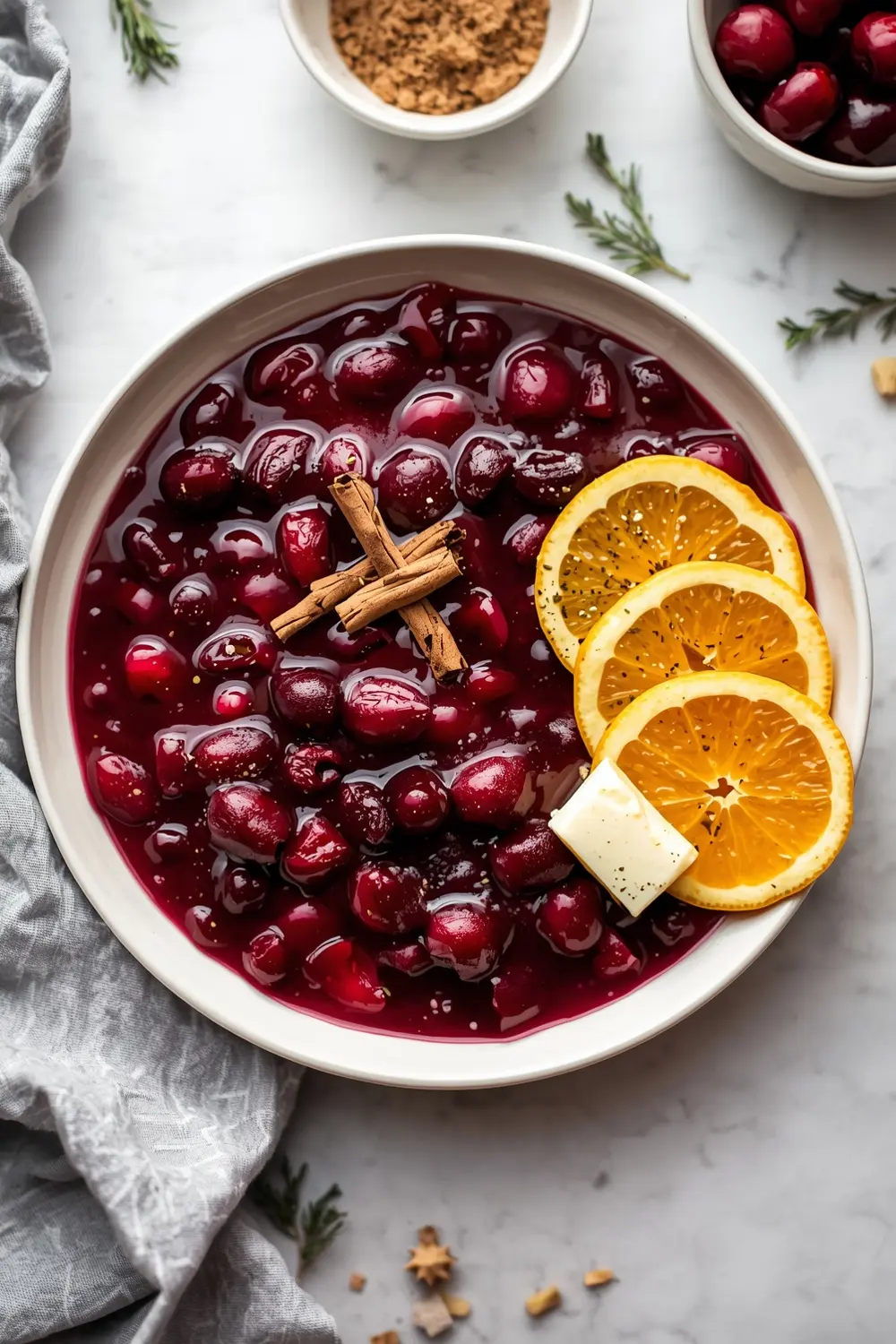
Combine 12 oz fresh cranberries, 1 cup water, and 1/2 cup orange juice in a heavy-bottomed saucepan over medium-high heat. Stir once, then let the mixture come to a rolling boil—you'll hear it before you see it, and that's your signal to move forward. I always step back here because hot juice can splatter unexpectedly.
Once boiling, add 1 cup granulated sugar, 1 tsp orange zest, 1/4 tsp cinnamon, and 1/4 tsp cloves simultaneously. Stir constantly for 30 seconds to dissolve sugar completely because lumps will remain if you don't introduce immediate movement. The spices will bloom almost instantly—your kitchen will smell like holidays happened.
Reduce heat to medium and let the mixture simmer uncovered for 12–15 minutes, stirring occasionally. The berries will begin popping audibly around minute 8. This is normal and exactly what you want, so don't panic. The sauce will look thin at this stage; the thickening happens in the next step.
Stir in 1/2 cup brown sugar and 1 tbsp lemon juice, whisking until brown sugar dissolves completely. This is where the cranberry sauce crowd Thanksgiving recipe develops its signature depth. Continue simmering for 3–4 more minutes without stirring constantly—let it settle so you can see the berries soften without collapsing entirely.
In a small bowl, whisk 1 tbsp cornstarch with 2 tbsp cold water until no lumps remain. Pour this slurry into the simmering sauce while whisking continuously—do this slowly because quick pours create lumps that you'll spend 10 minutes trying to break down. The sauce will thicken noticeably within 60 seconds.
Remove from heat and whisk in 1 tbsp butter and 1/2 tsp salt. The butter creates a subtle sheen and rounds out the sharp notes that sometimes emerge in homemade sauces. I always add salt last because it's your final seasoning check, and you can taste as you go here.
Let the cranberry sauce crowd Thanksgiving recipe cool in the pan for 5 minutes before transferring to a serving bowl. The sauce will continue thickening as it cools, so don't worry if it seems slightly loose at this stage. This resting period actually matters for flavor development.