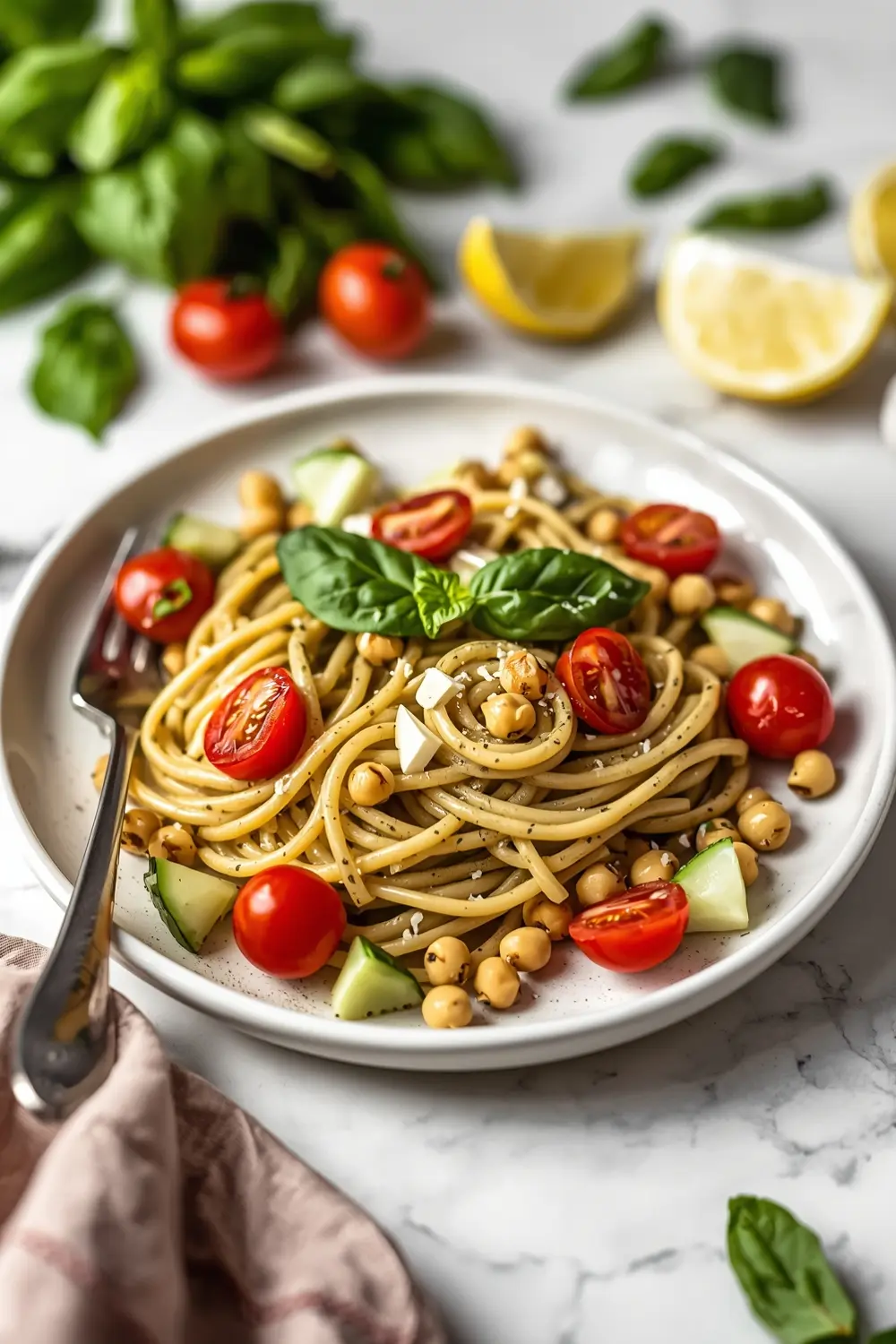
Bring salted water to a rolling boil and cook the whole wheat pasta according to package directions, usually 8–10 minutes. I always taste at the minimum time because pasta continues firming slightly as it cools. You want it just barely tender, not soft.
While pasta cooks, combine basil leaves, pine nuts, garlic, grated Parmesan, and olive oil in a food processor. Pulse until the mixture breaks down but still has visible texture—you're not making paste here. This texture difference is why hand-chopped pesto tastes different from store-bought versions.
Drain the hot pasta immediately and transfer it to a large mixing bowl while still warm. Pour the pesto over the warm pasta and toss thoroughly for about one minute, making sure every strand gets coated. The warmth allows the oil to penetrate, which cold pasta simply cannot do.
Add the lemon juice, sea salt, and black pepper to the warm cold pesto pasta crowd summer recipe, then toss again. Taste and adjust salt if needed—Parmesan is salty, so go easy at first. I learned this the hard way after oversalting a bowl for a dinner party.
Let the pasta cool to room temperature for about 10 minutes, then fold in the chickpeas, halved cherry tomatoes, and diced cucumber. Adding vegetables to warm pasta risks making them soft, so I wait until the temperature drops. This step takes real attention, but the payoff is vegetables that stay bright and snappy.
Cover the cold pesto pasta and refrigerate for at least two hours before serving, though you can make it up to 24 hours ahead. The flavors actually deepen as it sits, so tomorrow's version tastes better than today's. Transfer to your serving dish straight from the fridge.