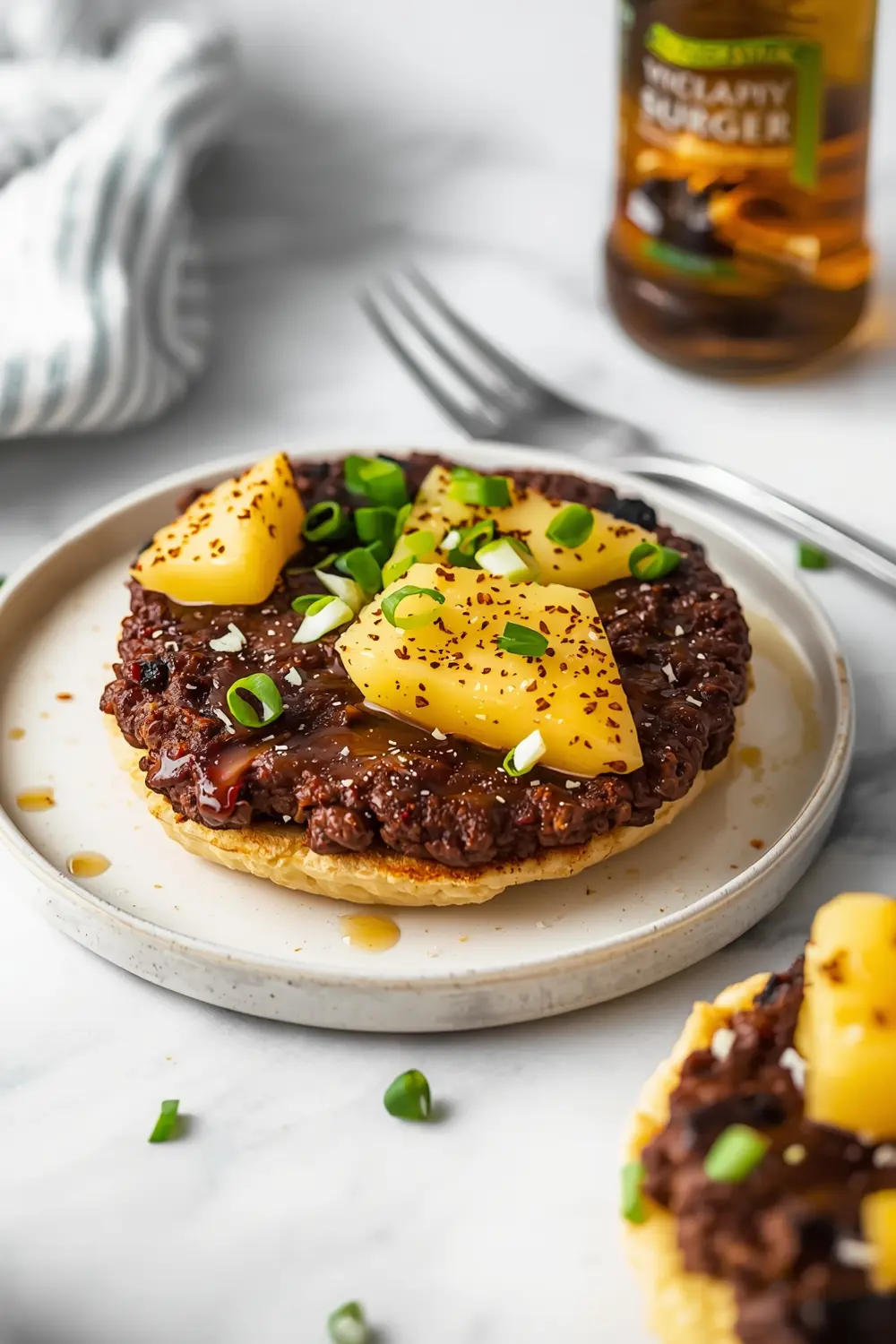
Combine ground beef, pineapple chunks, garlic powder, ginger, green onions, panko, egg, soy sauce, salt, and pepper in a large bowl. Mix gently with your hands for no more than 1 minute—overworking the meat creates dense, tough burgers. I learned this the hard way after compacting the mixture like I was making meatballs, and the result was heavy and flat instead of juicy.
Divide the mixture into 4 equal portions and form each into a 3/4-inch thick patty with a small indent in the center using your thumb. This depression prevents the burger from puffing up and ensures even cooking throughout because the thickest part (the center) won't overcook while edges finish. The indent disappears as the burger cooks, leaving a perfectly level finished patty.
Heat 2 tbsp olive oil in a cast iron skillet or on a grill over medium-high heat (375°F). Once the pan is hot enough that water beads and sizzles on contact, carefully lay the patties down—you should hear an immediate sear. Resist the urge to move them; let them sit untouched for 3 minutes to develop a flavorful crust.
Flip the burgers and brush the cooked side with 1 tbsp teriyaki sauce, then cook the second side for another 3 minutes. The reason you glaze after flipping (rather than before) is raw teriyaki contains sugars that burn easily; applying it to the already-seared side lets it caramelize without charring. This is where the tropical BBQ burger gets its signature gloss and depth.
Brush the top side with the remaining teriyaki sauce and cook for a final 1-2 minutes, or until the internal temperature reaches 160°F on an instant-read thermometer. At this point, the glaze should be bubbling and darkened at the edges—the pineapple inside keeps everything from drying out even though we're cooking past medium. This teriyaki beef burger pineapple should feel slightly yielding when you press it gently.
If using cheese, add it now and cover the skillet with a lid or tent with foil for 30 seconds to let it melt. Remove from heat and let the burgers rest for 2 minutes before transferring to buns—this keeps the juices from running out onto the plate immediately. I skip this step maybe once a year and regret it every single time.