Mix flour, salt, and sugar in a large bowl, then cut cold butter into quarter-inch cubes and work them into the flour until the texture resembles breadcrumbs with some pea-sized pieces still visible. This creates pockets of steam that make the crust flake instead of compress when heat hits it. Add ice water one tablespoon at a time, stirring gently until the dough just comes together—don't knead it or the gluten develops and toughens the final crust.
Wrap the dough in plastic wrap and refrigerate for at least thirty minutes while you preheat the oven to 325°F. I know thirty minutes feels long, but cold dough shrinks less during baking, and shrinking is the enemy of a crust that holds its shape when you slice into it.
Roll the dough between two sheets of parchment paper into a thin circle about one-eighth inch thick, then transfer it to a 9-inch pie pan by peeling off the top parchment, flipping it over the pan, and pressing gently to remove the other sheet. Press the dough into the bottom and up the sides without stretching—stretching causes shrinkage. Trim the edges and crimp them with a fork, then prick the bottom all over with that same fork to prevent puffing.
Line the crust with parchment paper, fill it with pie weights or dried beans, and blind-bake at 325°F for 12 minutes until the edges just start to turn pale. Remove the weights and parchment and bake another 3 minutes—the crust should look set but not browned. This step prevents a soggy bottom, which is the reason so many pecan pie Thanksgiving crowd sharing attempts fail silently.
While the crust bakes, whisk together corn syrup, brown sugar, eggs, melted butter, vanilla bean paste, and cinnamon in a bowl until completely smooth—the vanilla bean paste takes two minutes to fully dissolve, so keep whisking past the point where you think you're done. Stir in the pecans last, because they sink if the liquid is still warm. This filling smells like caramel the moment you open the vanilla container, and that's how you know the paste is doing its job.
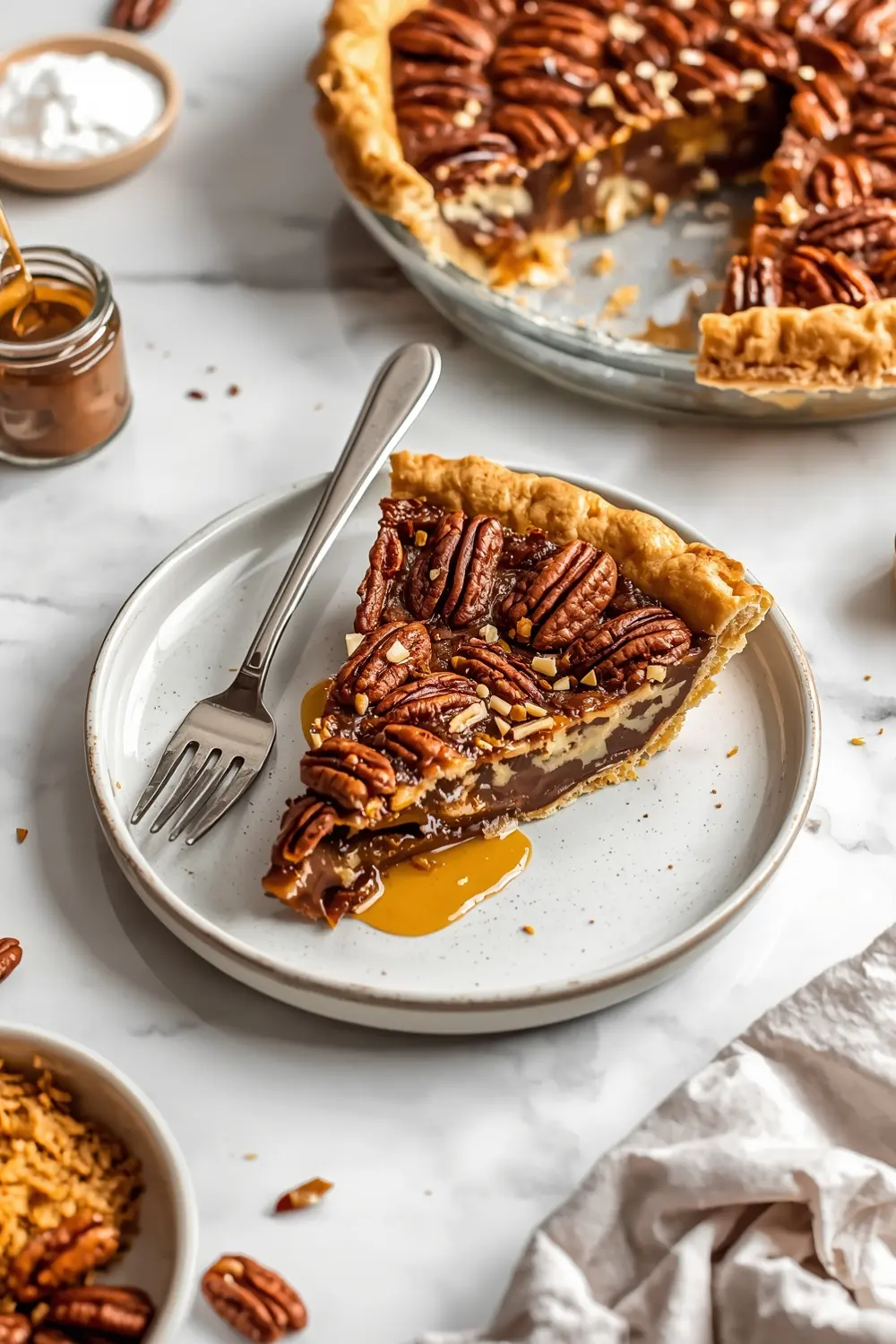
Pour the filling into the warm pre-baked crust and bake at 325°F for 50 minutes, until the filling jiggles just barely in the center when you shake the pan gently—not completely set, but not liquid either. This matters because the carryover heat continues cooking the filling for five minutes after you pull it from the oven, and overbaking locks the filling into a rubbery texture that nobody wants. I set a timer for 45 minutes and start checking at that mark.
Remove the pie from the oven and let it cool completely on a wire rack—at least four hours, though overnight is better because the flavors marry and the filling sets into slices instead of crumbling. Rushing this step ruins the texture, so patience is non-negotiable.