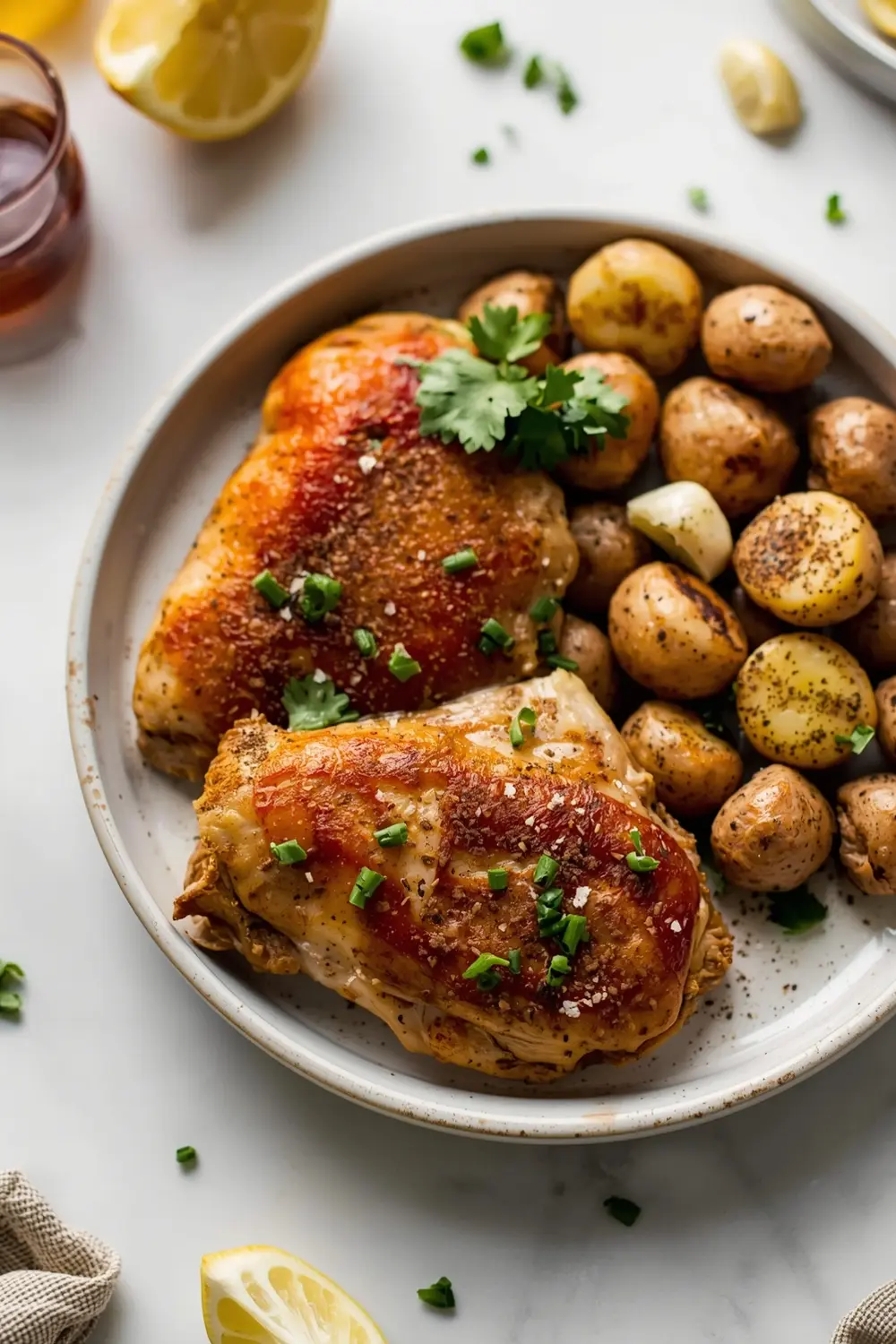
Pat your chicken completely dry with paper towels—this is the step most people skip, and it's the difference between skin that crisps versus skin that steams. Wet skin traps moisture, so I actually stand there for 30 seconds longer than feels necessary and honestly don't regret it.
Mix paprika, cumin, garlic powder, salt, and pepper in a small bowl, then rub this spice blend all over both sides of each thigh. Let that seasoning sit while you prep everything else—it gives the salt time to start breaking down protein, which means moisture stays locked in.
Combine olive oil, lemon juice, minced garlic, honey, and fresh parsley into a marinade, then coat each thigh completely and let them sit in this mixture for at least 20 minutes (overnight is better, but I get it—time doesn't always cooperate). The acid in the lemon is doing actual work here, tenderizing the meat from the outside in, so don't skip this or rush through it.
Preheat your oven to 425°F while arranging halved baby potatoes on a sheet pan, tossing them with 1 tbsp olive oil, salt, and pepper. Potatoes need a 10-minute head start, so get them in first while the oven climbs to temperature and you're mentally preparing for why everyone raves about this baked chicken thighs crowd summer recipe.
Remove the marinated thighs from the bowl and nestle them among the potatoes, skin-side up, making sure they're not touching (air circulation is what gives you that crispy skin instead of a steamed situation). Pour any remaining marinade over everything—I learned this the hard way after one batch where I thought the leftover liquid was wasted, and it absolutely isn't.
Bake for 35 minutes, checking at the 30-minute mark to make sure potatoes are starting to brown and skin is beginning to render. The thighs are done when an instant-read thermometer reads 165°F in the thickest part without touching bone—that temperature matters because undercooked chicken is a health risk, and overcooked thighs dry out even with bone-in protection.
Let everything rest for 5 minutes on the pan once it comes out—this keeps the juices from running out immediately when you move things to a platter. I used to skip resting and wondered why my chicken looked dry even though it wasn't, and those 5 minutes completely changed the game.