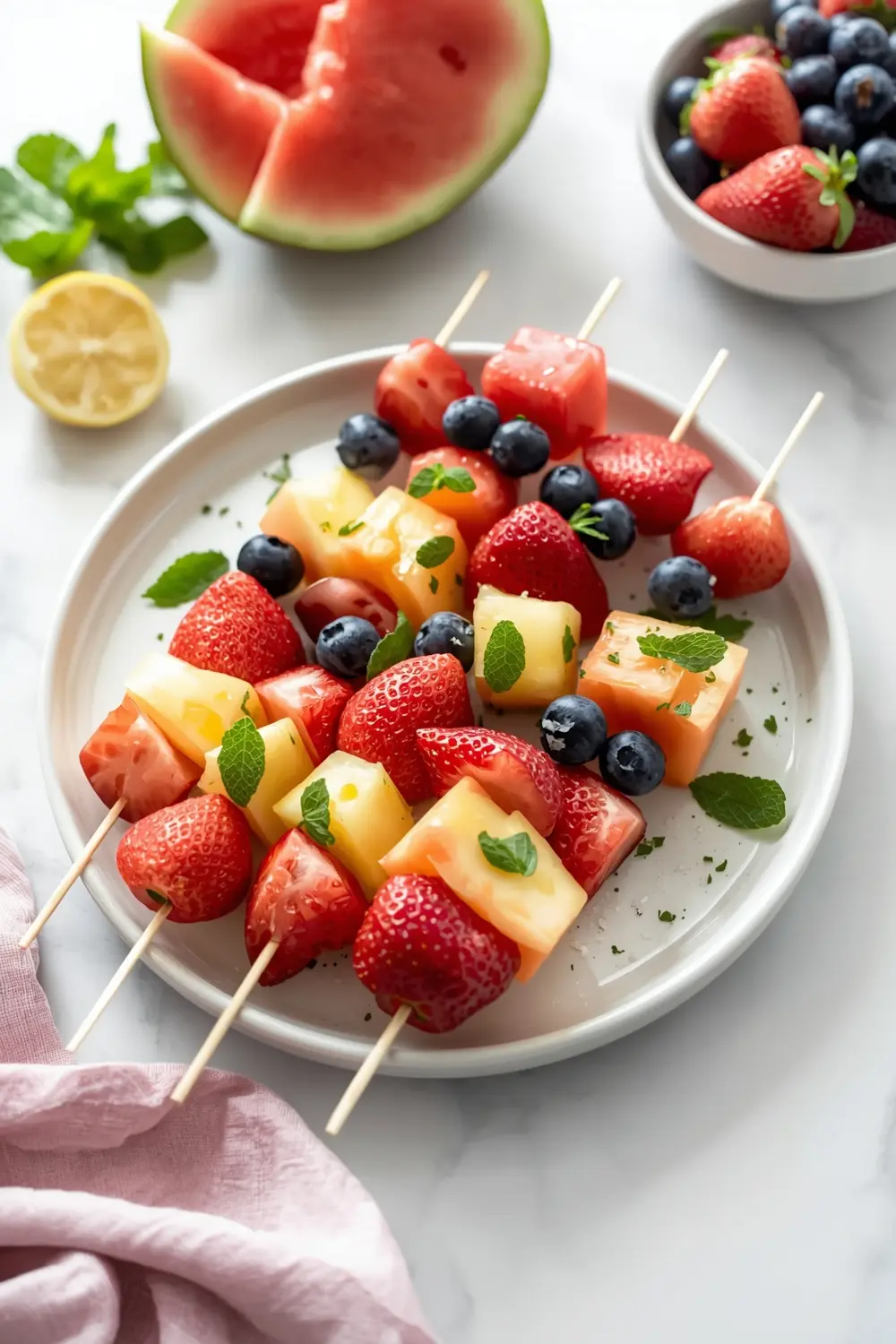
Soak wooden skewers in water for 30 minutes before you begin—this prevents burning and splintering. I learned this the hard way after serving skewers with charred ends. Wooden skewers are forgiving and inexpensive, so grab extras.
Cut all fruit into roughly the same size pieces, about one inch square. Uneven pieces look sloppy and cook unevenly on the platter as the sun hits different areas. Your eye will guide you better than any measuring tool here.
Pat the fruit completely dry with paper towels after cutting. Wet fruit won't hold the honey glaze properly and slides off the skewer mid-bite. This step takes two minutes and makes the difference between a finished platter and a dripping mess.
Thread fruit onto each skewer in a rainbow pattern: watermelon, strawberry, blueberry, cantaloupe, grape, pineapple, repeat. Alternate colors intentionally—the visual appeal is half the reason the 4th of july fruit skewers crowd disappears so fast. I always arrange one skewer perfectly, then use it as a template for the rest.
Arrange finished skewers on a large platter in a single layer, standing them upright. This prevents fruit from bruising under its own weight and keeps the presentation clean. Sandra swears this small detail makes guests feel like they're eating at a catering event, not a potluck.
Whisk together honey, lemon juice, olive oil, and sea salt in a small bowl, stirring until combined. The olive oil should emulsify slightly with the honey, creating a smooth glaze. Taste it—the balance should feel sweet but bright, never cloying.
Drizzle the glaze over the skewers right before serving, then scatter chopped mint across the platter. The 4th of july fruit skewers crowd prefers fresh herbs visible on top, which signals care and quality. Apply the glaze no more than 30 minutes before eating to keep everything crisp.