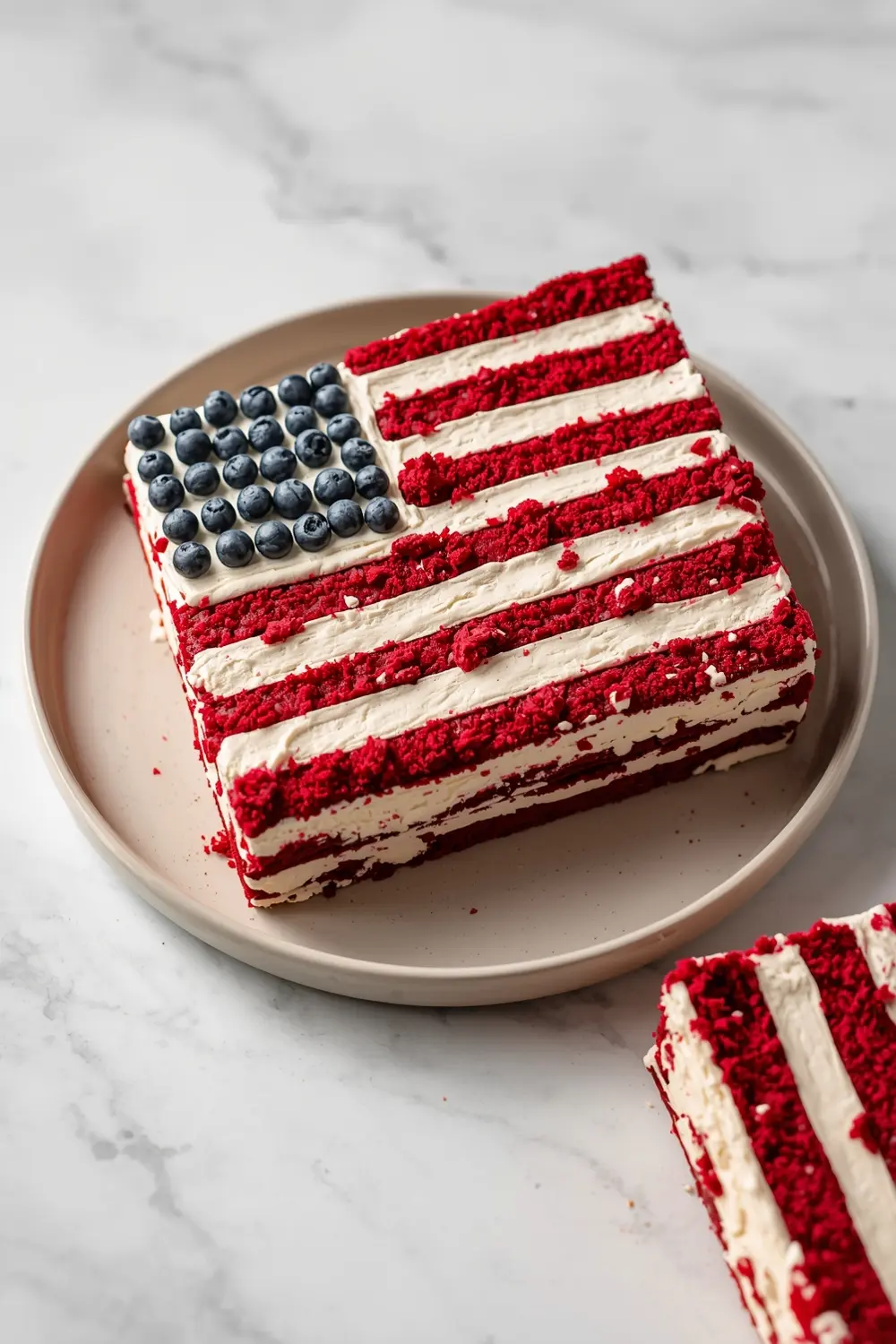
Preheat your oven to 350°F and grease two 9-inch round pans with parchment rounds. This step matters because parchment prevents sticking that ruins the even cake surface your flag pattern depends on. I've watched too many proud bakers flip a cake onto the counter and watch their design crack before assembly even starts.
Cream the butter and sugar together for exactly 3 minutes on medium-high speed. The mixture should look pale and fluffy like clouds—this incorporates air that creates the tender crumb people remember. You'll feel the resistance ease as the butter breaks down, which signals you've gone long enough but not too long.
Add eggs one at a time, waiting 20 seconds between each addition and scraping the bowl completely. Each egg needs time to emulsify into the butter mixture, which why rushing this step causes a separated, broken batter. I learned this lesson the hard way watching a cake separate in the oven and emerge dense instead of tender.
Whisk your flour, baking powder, baking soda, and salt in a separate bowl before adding to the creamed mixture. Alternately add the dry mixture and milk in three additions—starting and ending with dry—while beating on low speed. Here's the trick: add 1 tablespoon of lemon juice with the last milk addition, which is the secret that keeps this 4th of july flag cake crowd recipe moist for days without the flavor announcing itself loudly. Most bakers skip this step because they don't realize acid tenderizes the crumb structure.
Divide the batter evenly between your prepared pans and smooth the tops with an offset spatula. Bake for 42-45 minutes until a toothpick inserted in the center comes out clean or with just a few moist crumbs attached. Don't trust the crack on top—that appears before the center sets, which is why the toothpick test matters more than appearance here.
Cool the cakes in their pans for 10 minutes, then turn them out onto wire racks to cool completely. This waiting period builds patience before assembly, which I actually appreciate because rushing frosting onto a warm cake causes melting and sliding that ruins your patriotic design.
While cakes cool, whip your heavy cream with powdered sugar and vanilla until soft peaks form—about 2-3 minutes on medium-high speed. Stop before you reach stiff peaks because overbeaten cream breaks and separates when you layer and transport. I've learned this affects the flag cake texture noticeably at the table.