Combine flour and salt in a bowl, then cut cold butter into cubes and work it in with a fork until the mixture looks like coarse sand. This texture—not a paste—is what creates layers in your crust. I always taste a pinch to make sure the salt is evenly distributed because uneven seasoning gets magnified when it bakes.
Add ice water one tablespoon at a time, stirring gently until the dough just comes together without crumbling. Overworking the dough makes the crust tough, so stop as soon as you can form a ball. Wrap it in plastic and refrigerate for 15 minutes minimum—this rest period relaxes the gluten and prevents shrinking during baking.
While the dough chills, toss sliced apples with both sugars, cinnamon, nutmeg, and lemon juice in a large bowl. The lemon juice stops the apples from browning and adds complexity that people taste but can't identify—they'll just know something tastes "right." Taste the filling and adjust cinnamon if you want more warmth; this is your flavor insurance.
Roll out the chilled dough between two pieces of parchment paper until it's thin enough to see light through it. Parchment prevents sticking and gives you confidence—I used to stress about this step until I discovered this trick. Transfer it to a 9-inch pie dish and let it settle naturally into the corners without pushing.
Pour the apple filling into the crust, mounding it slightly in the center. Top with the second crust, seal the edges with a fork, and brush the whole top with beaten egg mixed with milk and water. Cut 4-5 small slits in the top so steam escapes and your filling sets instead of bubbling over—I learned this the hard way on my third attempt.
Bake at 375°F for exactly 50 minutes until the crust is deep golden and the filling shows just slightly at the slits. The aroma at minute 40 will make you second-guess the timing, but resist opening the oven—that temperature drop ruins browning. Let it cool for 10 minutes on the counter, then transfer to a wire rack.
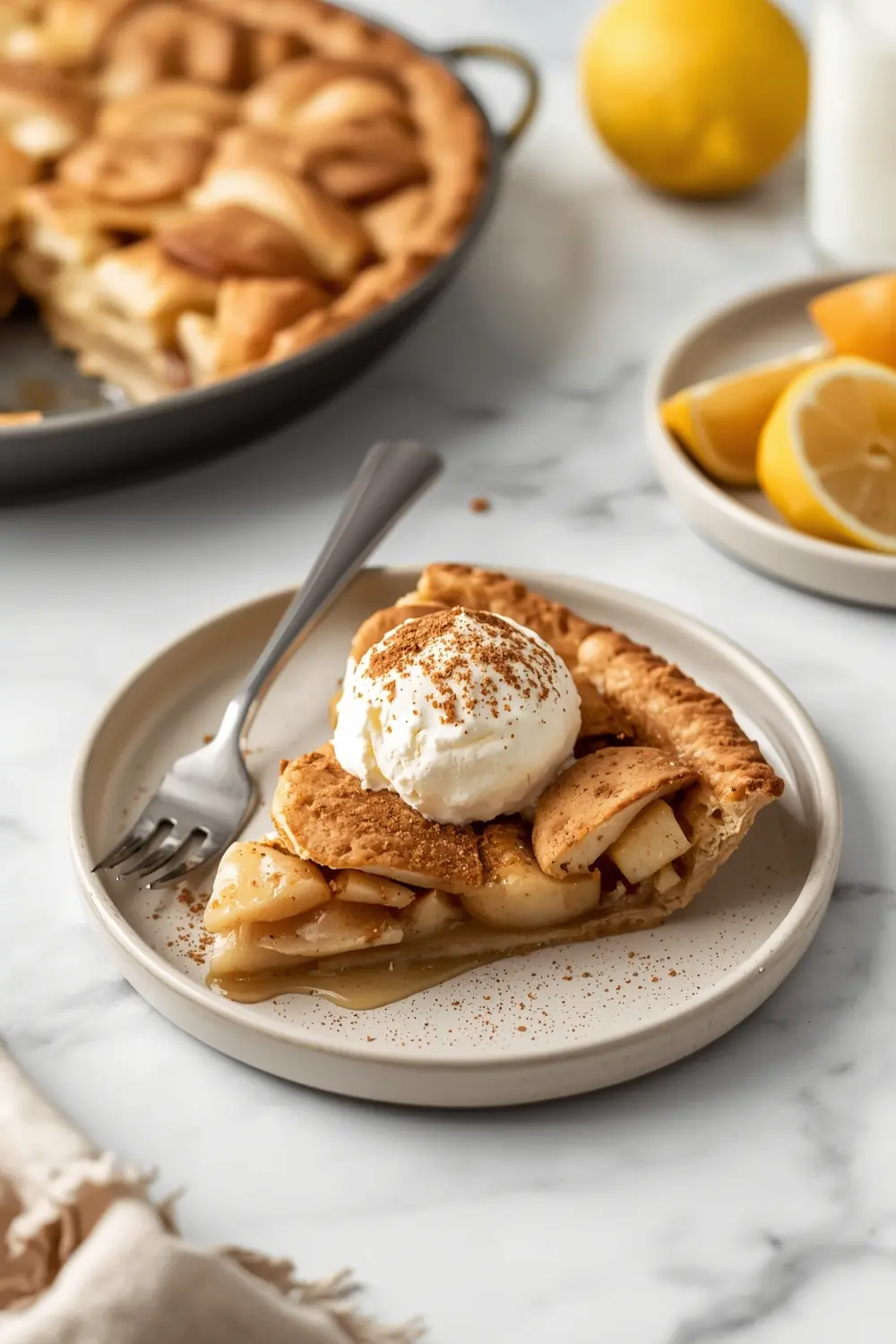
This cooling step is non-negotiable because it lets the filling set so you can actually slice it without everything sliding sideways. Cut into slices only after it's completely cooled to room temperature—about two hours total. Sandra made this mistake her first time and ended up with beautiful filling soup, but the second time she waited and got restaurant-quality slices.